
How Customer Service Teams Rebuild Trust After Negative Feedback
Negative feedback can weaken customer trust, but a thoughtful response can repair the relationship. Insights from customer service experts show how teams can respond with honesty, speed, and clear follow-through. Learn practical ways to find root causes, set realistic timelines, and prove that promised fixes are being made.

Answering for CustomerRelations.io
§ How this was made
The perspectives in this article were written by the named contributors and submitted through Connectively. Connectively's automated system selected them and used AI to write the headline, introduction, section headings, summary sections, and illustration, and to make minor edits for clarity. Articles are assembled and published automatically. Report errors to corrections@connectively.us. How we make our content

Illustration generated with AI
What the experts said
- Thank Customers and Seek Root CausesMichelle Robbins
- Separate Facts From OutcomesJörg Dennis Krüger
- Track Repairs With Weekly ReviewsRonald Osborne
- Reconcile License Charges Line by LineJens Hagel
- Own Your Share, Set One DeadlineSamantha Shelton
- Close Original Miss With Written ReportsNick Kuang
- Define Today’s Commitment HonestlyNicholas Gibson
- Flag Errors and Share Audit StatusPratik Singh Raguwanshi
- Acknowledge Disruption, Then Confirm DetailsJake Woods
- Honor Dated Follow-UpsScott Brown
- Engage Technical Teams, Then ReconnectJustin Bonfini
- Add a Second Analyst ReviewSagar Agrawal
- Offer Immediate Replacement or RefundNicolas Falourd
- Replace Reassurance With Specific TimelinesKruno Sulić
- Separate Apologies From ForecastsChristopher Coussons
- Fix First, Explain LaterCarolyn Vasquez
- Answer Swiftly With Practical OptionsJake Wardle
- Present Workable RemediesMr Charles Liu
- Revert a Misguided ReleaseRahul Agrawal
- Revise Creator Choices CollaborativelyDennis Ksendzov
- Lead With Compassion Through LossAnne Kedl
- Assign Owners to Dated RemediesEmma Rusby
- Maintain Scheduled Communication CadenceVishnuvardhan Reddy Kaithapuram
- Demonstrate Progress Through Free TestsDaniel Goh
- Take Reviews Offline and ListenChris Cox

Thank Customers and Seek Root Causes

Licensed Insurance Agent, USInsuranceAgents.com
We reach out from a place of understanding and thankfulness. We tell them that we appreciate that they took the time to give us feedback, and we ask questions to get to the heart of the matter. Sometimes, the feedback they give has a single point of irritation that can be easily remedied. It might not be that the entire interaction was bad, but that one part was, and that soured the entire ordeal in their mind.
We can't get to the heart of the issue if we address it from a defensive standpoint. No one wins if we do that.
The best response starts with, "Thank you for sharing your experience. Your satisfaction is so important to us, and we'd love to chat about what we can do better." Then we take the conversation off the public platform.
Separate Facts From Outcomes

Author, Expert and Mentor, The Conversion Hacker®
The move that has worked for us is to separate three things that usually arrive fused: acknowledgement, cause, and remedy. Most bad responses collapse all three into one sentence, and that is exactly how you end up promising an outcome you do not control.
Concretely: name the experience in the customer's own words, say what you know and what you do not know yet, and commit to one dated next step that is fully within your control. "I will call you on Thursday with what we found" is keepable. "This will never happen again" is not, and customers hear the difference immediately.
The response choice that rebuilt a relationship for us came from a failed test, not from an apology. A B2B medical shop's variant with certification badges and full technical specifications on the product page lost 74.01 percent revenue per user against control, measured on 1,779 users over 66 days. We stopped it, sent the client the exact numbers including the loss, and explained what it taught us: trust signals can add procurement friction instead of removing uncertainty.
No promises, one finding. Clients forgive a failed test that is reported honestly far faster than a success that is reported vaguely, because a loss with numbers is the only proof that the next report will also be true.
Track Repairs With Weekly Reviews

When a customer gives negative feedback after a disappointing experience, I respond by naming the miss plainly, stating the next concrete fix with a date, and putting that fix on the weekly progress sheet so it gets tracked. I do not promise a result I cannot control. At my telecom company and now with the owners I coach, that habit matters because vague apologies do not rebuild trust, and overpromising creates a second miss.
The progress sheet fields keep the recovery honest: three specific goals for the week, biggest setbacks, biggest wins, and roadblocks with how to overcome them. If we missed a deadline or a quality check, the next goal names the exact repair and when it will be done. The customer hears accountability in the first call, then sees follow through because the item is reviewed every week alongside leads, revenue, and hours on the business. Accountability without overpromising is naming what went wrong, owning the next step, and refusing to sell a guarantee you cannot deliver.
Reconcile License Charges Line by Line

Founder & Owner, kjello
When a small consultancy we look after said they couldn't make sense of the licence lines on our invoice, we sat down and went through it with them line by line. We matched the bill to the licences they really had and gave them one fixed technical contact. As the founder of that Hamburg IT firm, my rule is to fix the specific thing in front of you first and only then talk about the future. Jens Hagel, Founder & Owner, kjello (Hamburg, Germany)
Own Your Share, Set One Deadline

Owner/Founder, Align Lending
Own your part, promise only the next step When a client tells me the experience let them down, I do two things. I own the part that was ours, in plain words. And the only promise I make is the next step and when they will hear from me. I own a mortgage brokerage in Michigan, and the thing I have to keep reminding myself is that I do this every day and my client doesn't. I've said it this way: "this is sometimes the largest transaction that people make in their whole life." Something that looks small to me can feel very big to the person on the other side. So the first choice is to not explain first. An explanation can be completely true and still sound like an excuse. I say what they experienced back to them, and I say which part was on us. The second choice is about promises. A lot of a mortgage is not mine to promise. The lender makes the underwriting decision. The appraiser sets the value. If I promise an outcome I don't control just to end an uncomfortable call, I've set up the next disappointment. What I can promise is mine: I will find out what happened, and I will call you by a time I name. If I don't know the answer yet, I say so. "Let's check." Then I keep that one small promise exactly. That is the response that has rebuilt more trust for me than any apology. People forgive a problem faster than they forgive silence. Accountability and a promise are not the same thing. Accountability is about what already happened. A promise is about what happens next. Keep the second one small enough that you can keep it. Samantha Shelton, Align Lending
Close Original Miss With Written Reports

Co-founder, Home Sweet Home Offers
An apology needs a next step the customer can verify.
If we missed a promised seller callback, I'd name that specific failure and apologize without hiding behind a busy schedule. I'd ask what information they were left waiting for, then provide what I can confirm and clearly identify anything still unresolved.
My next commitment would be something within my control: checking the outstanding item and giving a written update at an agreed time, even if the answer is still pending. I would not promise a closing date simply to make the conversation feel better.
The response choice I'd recommend is closing the loop on the original miss, rather than offering a broad assurance that it will never happen again. At the next update, I'd explain what was checked, what remains open, and who needs to act. Accountability should reduce the seller's need to chase us, not leave them managing our apology.
Nick Kuang, Co-founder, Home Sweet Home Offers
Define Today’s Commitment Honestly

Marketing Director, Stash + Lode
I acknowledge what went wrong before moving into what we can do about it. The temptation is to promise whatever will calm the situation, but that can create a second disappointment. I prefer wording like, "Here is what I can commit to today, and here is what I still need to confirm." That shows ownership without pretending uncertainty has disappeared. In service businesses especially, rebuilding trust is less about a perfect apology and more about making the next promise small enough that you can definitely keep it.
Flag Errors and Share Audit Status

Manager, Digital Experience, CXrove
Accountability in customer recovery hinges on replacing vague apologies with a transparent roadmap of the internal resolution process. After 15 years of managing BPO operations, I've found that the fastest way to lose a customer permanently is to offer a fix that never materializes; to a disappointed client, an empty promise feels like a second betrayal. The objective is to move beyond emotional de-escalation toward a shared understanding of the resolution steps.
One response choice that consistently rebuilds trust is replacing the reflexive "I will fix this for you right now" with "I have personally flagged this specific error to our operations lead for an immediate audit, and I will provide a status update by 4 PM today." This shift provides concrete evidence of action without overpromising results that may be outside the immediate control of the agent. It transforms the customer from a ticket number into a stakeholder in the recovery process.
When managing high-stakes escalations in sectors like fintech or healthcare, we focus on validating the friction point by explaining exactly where the workflow breakdown occurred. Providing this level of operational transparency demonstrates that you are investigating a system failure rather than just managing a mood. Customers remain loyal to brands that respect them enough to provide the truth about a problem, even when that truth involves a timeline for investigation rather than an instant solution. Technology scales operations, but disciplined process transparency is what scales relationships.
Acknowledge Disruption, Then Confirm Details

Lighting Consultant, Residence Supply
I start by acknowledging what went wrong for the customer, rather than explaining what happened on our side. If they've planned an installation around information we gave them and that information was wrong, the issue isn't just an incorrect detail. They've lost time and may now have to rearrange other people's work.
I'd say, "We gave you information you relied on, and it wasn't accurate. I'm sorry for the disruption that's caused." Then I separate what I can confirm from what I still need to investigate. I won't promise a replacement date or a particular resolution until the people responsible have confirmed it.
One response choice I'd emphasise is committing to the next update rather than guessing at the final outcome: "I'm checking this with our fulfilment team today, and I'll update you by tomorrow afternoon, even if I'm still waiting on part of the answer."
That last part matters. Silence can leave the customer wondering whether they need to start chasing again. An honest update gives them something dependable without pretending the problem is solved.
I also keep the original complaint in view throughout the exchange. A proposed fix isn't necessarily useful just because it's available; I need to check whether it addresses what the customer actually needs now. Rebuilding the relationship means following through on a realistic commitment, not making a bigger promise to soften a difficult conversation.
Honor Dated Follow-Ups

Founder, Focus Group Placement
When a customer tells us we let them down, I acknowledge the specific problem in plain language, apologize for it, and then commit only to what I can personally control, like investigating the cause and following up by a stated date. In my experience running consumer-facing survey and focus group services, vague promises like "this will never happen again" backfire, while narrow, verifiable commitments build trust. One choice that rebuilt a relationship for us was replying to an upset participant with a clear account of what went wrong on our end, what we were changing, and exactly when they would hear from me next, and then actually following up on that date. Doing what I said I would do, even when the news was modest, mattered more to that customer than any grand gesture.
Engage Technical Teams, Then Reconnect

Account Executive, Premier Construction Software
What I've noticed is that customers don't always expect an immediate fix, but they do expect you to take their concerns seriously. When someone's had a bad experience, I try to understand exactly where things went wrong before explaining what we can realistically do about it.
In construction software, even a small reporting issue can disrupt someone's billing or project decisions. So rather than promising it'll be fixed overnight, I'd acknowledge the impact, get the right technical team involved and give the customer a clear timeline for the next update. One response habit I really value is following up personally, even when the issue isn't fully resolved. It shows the customer you haven't disappeared once the difficult conversation is over. That's often where trust starts coming back.
Add a Second Analyst Review

Founder, Qubit Capital
A founder was upset with our review of her pitch deck. We had marked 3 slides as missing. They were in her appendix the whole time. After that, she doubted every other note we gave her. Founders pay us to get them in front of investors. If we can't read your deck right, why trust our investor list?
I didn't promise her more investor meetings or faster funding. Neither is fully up to us. I promised something smaller. A second analyst would check her whole deck again before any investor saw it. I also left out how the mistake happened. I think that's what kept her. My reply went out the same afternoon. It was 4 lines long.
Offer Immediate Replacement or Refund
Say you're sorry, take responsibility for what happened, and offer concrete options you can actually deliver now rather than vague fixes. Start with a short, personal apology, explain what went wrong in one sentence, then offer choices the customer can pick from and a clear next step you will take immediately.
At Cyber Techwear we've had delayed shipments. One approach that rebuilt trust was offering the customer a tracked replacement or an immediate refund, covering any extra shipping, and then telling them exactly when the replacement would ship.
Giving choice and acting fast prevented further back-and-forth and restored the relationship.
Replace Reassurance With Specific Timelines

Founder & SaaS Product Builder, Cliprise
When a customer gives negative feedback after a disappointing experience, the most effective response is usually: acknowledge the impact, own the gap, explain the next step you can actually deliver, and stop there. The mistake many companies make is trying to calm the situation with promises they do not control, like saying it will never happen again or that every issue will be fixed immediately. A better response is, "You're right to be frustrated. We fell short here. I'm reviewing what happened, I'm fixing the part we can address now, and I'll update you by [specific time]." That shows accountability without pretending you can guarantee a perfect outcome.
In SaaS and digital products, I have found that customers respond better to clarity than optimism. If a billing issue, feature failure, or support delay caused the problem, I focus on naming the exact failure point and separating what is already done from what is still being investigated. For example, one response choice that helped rebuild a strained customer relationship was: "I can't promise the full solution until I verify the root cause, but I can promise you won't be left guessing. Here is what we've confirmed, here is what we are changing now, and here is when you'll hear from me next." That shifted the conversation from defensiveness to trust because it replaced vague reassurance with a reliable communication commitment.
What rebuilt the relationship was not a polished apology by itself. It was giving the customer one concrete, achievable next step and then following through exactly when promised. Even if the final fix took longer, the customer saw that we were accountable, transparent, and realistic. In my experience, customers are often willing to forgive a disappointing experience if they feel the company is being honest, specific, and consistent rather than overconfident.
Kruno Sulic Founder & SaaS Product Builder, Cliprise
Separate Apologies From Forecasts

Director, Visionary Marketing
When a client sends negative feedback after a disappointing delivery, I open with what went wrong in plain language and what I will do next, without promising a result I cannot control. Accountability is naming the miss. Recovery is a dated next step. The response choice that rebuilt relationships for me is to separate apology from forecast. I own the miss immediately. I only attach a timeline once I have checked capacity.
That habit stops me from soothing someone with a date that slips again. Marketing work has enough uncertainty around rankings and review cycles that a soft promise does more damage than a firm smaller commitment. Organic leads still matter in the recovery conversation because clients watch cost. My SEO ROI data puts average organic cost per lead at £14 against £44 for PPC, which is useful context when a client is deciding whether to stay the course after a rough month. Own the miss. Promise only the next concrete action.
Fix First, Explain Later

Founder, Ready Rental Cleaning
Own it in the first sentence. Say what went wrong in the person's own words, say you're sorry it happened, and skip the paragraph of context. If someone says the bathroom wasn't done properly, I repeat that back: the bathroom wasn't done properly. That one sentence tells them they were heard.
Then I commit only to things I control. I can promise to look at the photos from the job today. I can promise a re-clean of the areas they flagged. I can't promise it will never happen again, because cleaning is done by people in homes that are all different, so I don't say it.
The response choice I'd point to is fixing before explaining. I offer the re-clean in the very first reply and hold the explanation until they ask for it. Someone who's already annoyed reads a long explanation as an excuse, even when every word of it is true.
I also give a specific time. "I'll send you an update by 5 today" is something I can keep, and keeping it matters more than the wording of the apology. When people check and see I did exactly what I said, the next message from them is usually calmer.
For reference, a repeated lapse is a process problem, so I look for the missing step in the checklist, and I tell them that's what I'm doing.
Answer Swiftly With Practical Options

Founder, EV Cable Hub
Own the part that was yours, fix what you can fix today, and be precise about what you cannot promise. In a cable shop the disappointing experience is often a slower charge than the customer expected, and the honest answer can be that the cable is working and the car is the limit.
That is a hard thing to say without sounding like an excuse. I start by agreeing that the experience fell short of what they were told, because if the listing or my advice set the wrong expectation, that part is on me. Then I explain the limit in one or two sentences and offer something concrete: a swap to a cable that suits their car better, with the return postage paid, or a check of their home supply if the numbers do not add up. What I will not do is promise a faster charge than the car can physically accept, because that just moves the disappointment a week down the road.
The response choice that has rebuilt the most relationships is answering personally and quickly. My About page tells people I read the help desk emails myself, and that matters when someone is annoyed. A short reply from the person who runs the shop, admitting the misunderstanding and offering a concrete fix, usually lands better than a long policy statement, however polite.
Present Workable Remedies

Marketing Director, Cubic Promote
I try not to rush into defending what happened. If a customer has had a poor experience, the first job is to understand exactly where things went wrong and what part of it affected them most. If we've made the mistake, I'd rather say so clearly than hide behind a long explanation. At the same time, I don't promise an outcome until I know what we can actually deliver.
One response choice that has helped is giving the customer a clear next step instead of a vague apology. If we can remake something, replace it, correct the branding or find another practical fix, we explain what we can do and when we can do it. If we can't give them exactly what they're asking for, I'd rather be upfront about that and offer the closest workable option. People usually respond better when they know someone has taken ownership and is actually moving the issue forward.
We've found that a difficult order doesn't automatically mean the relationship is lost. Sometimes the way you handle the problem matters just as much as the original issue. If the customer can see we've listened, owned our part and followed through on what we said we'd do, there's still a good chance of keeping the relationship.
Revert a Misguided Release

Founder & CEO, QuickIntell
I learned this at ReimagineHome after a model update that looked like an improvement in our testing. The output became more impressive visually, but people were getting rooms that felt impractical for their actual homes. Negative reviews arrived within 48 hours. We rolled back the update and apologized publicly. Rebuilding trust took about three months.
The response choice that mattered was accepting that our definition of better had missed what customers wanted. Defending the model's quality would not have made the product useful to them. The rollback gave the apology a concrete action behind it.
I would separate an acknowledgment from a promise. Say what you understand about the disappointing experience, name what you are doing now and be clear about what you still need to investigate. Don't guarantee that a problem can never recur just to make the reply sound reassuring.
A useful apology should make the next step easier to understand. In our case, the lesson was also to judge future changes by whether people could use the result in their own lives, rather than by whether an output looked impressive in isolation.
Revise Creator Choices Collaboratively

Influencer Retention Specialist, Influencer Advisory
One client of my small influencer agency didn't like part of our first creator list. I wrote back, thanks for getting back to me, we found replacements for the ones you didn't like and also replaced any that weren't in the US. I put together a final list of 15 creators, we'd select 10 from that group, and only if everything looked good would we take the next steps.
The next day I was writing, sounds perfect, we can start with these five creators. When one creator had a very packed schedule, I said we may replace her with another creator of similar size and audience fit so that she doesn't underdeliver, and we'll keep you fully updated.
Later all the creators received the product, they all loved it, and we had already started creative plans based on the ones they had mentioned.
Lead With Compassion Through Loss

Owner/Manager, Caring Transitions of Denver Southeast
In our work, negative feedback almost always arrives in the middle of grief. We help families clear out and liquidate a home, often after a loss, so when someone is upset with us, the first thing I try to remember is what that family is carrying.
One project tested this more than any other. The client passed away while we were in the middle of the job, and her husband became very angry with us. We had donated a coat that, as it turned out, was a family heirloom, but he had never told us he wanted to keep it. He refused to pay us and said he was going to sue.
I was devastated by how upset he was, and I will admit I wondered for a moment whether this was the right job for us. But the response choice we made was to stay compassionate and keep showing up. We could not bring the coat back, so we focused on what we could do: we walked the family through the rest of the project as gently as we could and did everything we could to ease the situation.
In the end, his children came back to us. They apologized for what had happened, thanked us for our service, and paid us for the work, because they knew how hard our team had worked. They still refer other families to us today.
What I took from it is that accountability does not mean agreeing with everything someone says in a painful moment. It means being honest about what happened, staying respectful, and continuing to treat their home and their family with care. A household of memories holds a lot of value, and when a family sees you protect that value even on the hardest day, the trust often comes back.
Assign Owners to Dated Remedies

Director, Zenvy Beauty
When a customer sends negative feedback after a disappointing order or routine result, I name the miss in plain language and state the next action I can complete, such as a replacement, a clearer quiz path, or a rewritten product note. Warm apologies without a fix teach people that we are polite and unreliable at the same time, which is worse than a blunt recovery plan. I refuse promises I cannot keep, including hair outcomes that depend on porosity, weather and consistency at home. In our wash-day research 46% of women have put a wash day off simply because the block of time was not there, so disappointment often mixes product mismatch with life logistics, and the honest repair is a simpler routine plus a concrete follow-up window they can calendar. That response choice rebuilds trust because it respects the customer as an adult who can handle a clear plan without fluff. Accountability is a dated next step with an owner named in the reply, because discounts without diagnosis just buy a quieter week and the same complaint returns later with less patience left.
Maintain Scheduled Communication Cadence

Vishnuvardhan Reddy Kaithapuram
Software Development Engineer, Amazon
I start with what I can say is true, and I say it plainly. When a customer gives negative feedback after a disappointing experience, I name the specific change that caused it, its likely cause, and one concrete next step. I do not defend the old numbers and I do not promise a fix I cannot guarantee. Accountability is saying what happened, what I know, and what I do not know yet, in the same message. A customer can forgive a bad experience. They cannot forgive being told everything is fine when it is not.
The response choice that rebuilt the relationship was a short, honest timeline. During an outage I keep a fixed update rhythm, I give the impact, the workaround, and the next update time, and I withhold the unconfirmed cause and say I am doing that. The same split works after negative feedback. I state the impact on the customer's work, I name what we are doing in the meantime, and I say when the next update will come. When the refresh was clean again, I said so, and I said what had caused the stale numbers and the one step the customer could take now that the figures were reliable. I did not ask for a meeting. I gave them something they could act on.
The promise I make is a rhythm. I promise the next update time and I keep it, even when there is nothing new to report, because a missed update reads as a hidden decision. Trust returned because the customer saw the same pattern every time: a specific change named, a cause stated, a next step given, and an update that arrived when I said it would. That reliability is what accountability means to me.
Demonstrate Progress Through Free Tests

Chief Marketing Officer, RankAISearch
1. I always start with the customer's words and ensure that I understand what they have lost in one line of text. The subsequent three points will relate to what we did wrong, what we could not do and what we will do next. This applies for RankAISearch as well. The promise I never make is that you will be recommended by ChatGPT. As mentioned before, AI answers change on a daily basis and from model update to model update. The only promise I can keep is the next step in the process and the exact date of the next update. This will also contain the "boring" updates as promised.
2. I ran an unhappy client through a free test of the service he needed. He was a local service business owner and we had set his expectations wrong in the first meeting. He typed "best [his service] in [his area]" into ChatGPT and Gemini with memory off. (He wasn't named by either, but he could see which sites the AI cited to answer his question. Two of them were directories where his listing wasn't included or was listed with an old phone number.) After some plain speaking with the client of what we had done wrong, we settled on one change to be made per week, all to be written down, and a re-check in 4 weeks time. He's still a client. A free test that anyone can run themselves to test the service they need to have is a lot more powerful than any number of sorry emails that I could send.
Take Reviews Offline and Listen
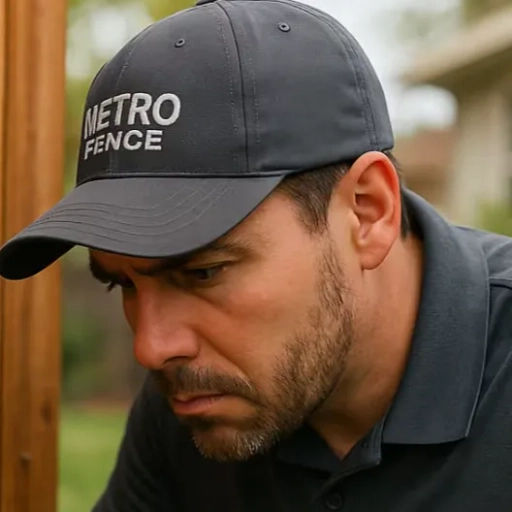
Director, Residential Operations, Metro Fence Company
The first thing I do with negative feedback is read it myself. I personally respond to nearly every Google review we get, good and bad, because I want to know what we're doing well, where we can improve, and what our customers are actually saying about their experience with Metro Fence.
When someone is disappointed, the worst thing a company can do is argue with them in public. So my reply does two things. It acknowledges what they experienced in plain language, and it invites them to talk directly with management. A review thread isn't the place to solve a problem. A phone call is.
Accountability without overpromising comes down to knowing exactly what you stand behind before anyone is upset. Our residential warranty is pretty simple: 10 years of structural stability. If an MFC-installed fence experiences a structural failure within 10 years because of our workmanship or installation, we fix it. Period. Because the scope is clear, I can make that commitment to an unhappy customer without hedging, and I can also be honest when something falls outside it. We're not going to hand you five pages of fine print trying to explain all the reasons we don't have to come back. But we're also not going to promise something we can't deliver just to make a bad review go away.
The response choice that matters most is listening for the lesson underneath the complaint, even when the customer liked the finished fence. We had a homeowner who was happy with the quality of the work but felt our crew moved so quickly that a couple of things got missed. In one hand, I take that as a compliment, because efficiency is a good thing. But making someone feel rushed isn't. What we want people to feel is minimal disruption to their home, not a crew trying to get in and out.
Frankly, that kind of feedback is more useful than a five-star review, because it tells you exactly where your intentions and the customer's experience didn't line up.
I've always said we're a customer service company that happens to build fences. Negative feedback is part of that job, not a distraction from it. And if something doesn't work out, call us. We're still here.