
Why the Best Loyalty Program Is Not a Program at All
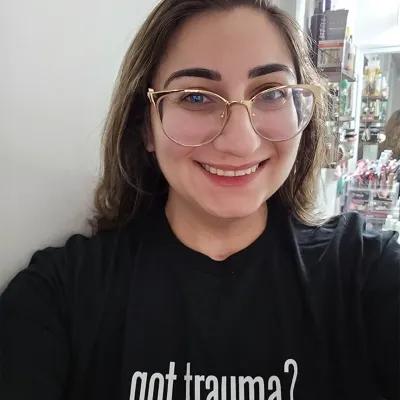
Answering for CustomerRelations.io

A small brand will never win on points and discounts. Here is what it can win on instead.
I run a small mental health apparel brand, and I have never built a loyalty program. No points. No tiers. No punch card promising a free item after the tenth purchase. By the conventional wisdom of customer retention, this is a mistake I should have fixed months ago.
And yet a quarter of my customers come back. For a brand barely a year old, that returning-customer rate is the number I am proudest of, and not one point of it was bought with a discount structure. It was built on something older and far harder to copy: an actual relationship.
I think the customer-relations world has quietly confused two things that are not the same. Loyalty programs and loyalty. One is a mechanism for rewarding repeat behavior. The other is the reason a person wants to come back in the first place. You can run a flawless points program and still have customers who feel nothing for you, who will leave the second a competitor's coupon lands in their inbox. Points create a habit. They do not create a bond. And in a market where every brand can offer ten percent off, the bond is the only thing left that cannot be undercut.
Here is what I have learned about building that bond as a tiny brand competing against companies with a thousand times my budget.
Customer service is not a department. It is the relationship, happening in real time.
When someone emails my brand, the person who replies is me, the same person who drew the design they are writing about. There is no ticket queue, no canned macro, no tier-two escalation. There is a human who made the thing, answering another human who bought it.
I know not every business can operate that way at scale. But the principle underneath it travels: customer service is the single highest-leverage relationship moment you have, and most companies treat it like a cost to be minimized. A customer who reaches out is not a problem to resolve in the fewest possible words. They are a person handing you a rare, direct line to show them who you are. The brands that win loyalty treat a service interaction as the relationship itself, not as the cleanup crew that shows up after the sale.
The actionable version of this, the thing you can do tomorrow: read your own customer-service replies and ask whether they sound like they were written by a person who is glad this customer exists. Not efficient. Not on-brand. Glad. That one shift in tone does more for retention than most points programs, and it costs nothing.
The relationship is built after the sale, not during it
Most brands pour everything into the moment of purchase and then go silent until they want the next order. That silence is where loyalty quietly dies.
One of the most effective things I do is almost embarrassingly simple. When a returning customer orders again, they get a message that opens with "You came back." Not a receipt. Not a cross-sell. Just a small, genuine acknowledgment that I noticed, and that it meant something to me. People reply to that email. They tell me why they came back, who the shirt is for, what they are going through. You cannot get that from a punch card.
Relationship management, stripped of the jargon, is just remembering that the person on the other end is in the middle of their actual life. They were having a hard day when they bought from you, or a good one they wanted to mark. When your follow-up treats them like a transaction ID, you confirm that the relationship was never real. When it treats them like a person you remember, you give them a reason to stay that no discount can manufacture.
The one loyalty lever a small brand has that the giants cannot copy
I cannot out-spend the big retailers. I cannot out-ship them, out-discount them, or out-advertise them. There is exactly one thing I can do that they structurally cannot, and it is the foundation of everything that keeps my customers. I can stand for something specific and let them belong to it.
Every order from my brand sends ten percent of proceeds to mental health organizations. That is not a marketing line. It is the reason a meaningful number of my customers chose me over a cheaper, faster option, and the reason they come back. They are not buying a product and collecting points toward the next one. They are participating in something they believe in. Belonging is the most durable form of loyalty there is, and it is the one thing a faceless megabrand can never authentically replicate, because it cannot be bolted on after the fact. It has to be true.
You do not need a donation model to use this. You need a point of view. A reason you exist beyond moving units, stated plainly enough that the right people feel like joining it. Shared values create the kind of loyalty that survives a competitor's sale, because the customer is not loyal to your price. They are loyal to what you both care about.
Be worth being loyal to
If I could give the customer-relations field one reframe, it would be this. Stop asking how to make customers loyal, as if loyalty is something you extract with the right incentive design. Start asking whether you are worth being loyal to. Whether your service makes people feel seen. Whether your follow-up sounds like a person. Whether you stand for anything a customer would be proud to stand near.
Build that, and you may not need a program at all. Build only the program, and you will spend forever wondering why the points never turned into love.